Types of Teacup Dogs: 9 Powerful Tips for Choosing a Healthy and Happy Puppy
Small dogs have become popular companions for families, singles, seniors, and people living in apartments or smaller homes. Their compact size, affectionate personalities, and appealing appearance make them attractive to many prospective dog owners. However, anyone researching the types of teacup dogs should understand the difference between an officially recognized breed and the term “teacup.”
“Teacup” is generally a marketing description rather than an official breed category. Many dogs advertised this way are naturally small toy or companion breeds that are being promoted as exceptionally tiny. The American Kennel Club recognizes numerous small breeds, including Chihuahuas, Maltese, Pomeranians, Poodles, Yorkshire Terriers, Papillons, Shih Tzus, and others.
The most important consideration when choosing a small puppy should therefore be health, temperament, responsible breeding, and suitability for your lifestyle, rather than simply finding the smallest possible dog.
What Are the Types of Teacup Dogs?
When people search for the types of teacup dogs, they are usually looking for very small versions of breeds that are already naturally compact.
There is no single official “teacup” breed group. Instead, the term can be applied to individual dogs from several small breeds.
Common breeds that may be marketed with the teacup label include:
- Chihuahua
- Yorkshire Terrier
- Toy Poodle
- Pomeranian
- Maltese
- Shih Tzu
- Pekingese
- Papillon
- Japanese Chin
- Brussels Griffon
- Chinese Crested
- Italian Greyhound
The AKC’s Toy Group provides a useful reference for recognized small companion breeds and their individual characteristics.
Understanding the actual breed behind the “teacup” label is important because every breed has different grooming, exercise, temperament, and care requirements.
Popular Types of Teacup Dogs
1. Teacup Chihuahua
Chihuahuas are naturally very small dogs and are well known for their confident, alert personalities. Despite their small bodies, they can be energetic and expressive companions.
Because of their size, owners should take care around stairs, high furniture, larger animals, and rough play.
2. Teacup Yorkshire Terrier
Yorkshire Terriers are small terriers with lively personalities and distinctive coats. Their long hair can require considerable grooming and regular brushing.
They can be affectionate companions but still benefit from consistent training and early socialization.
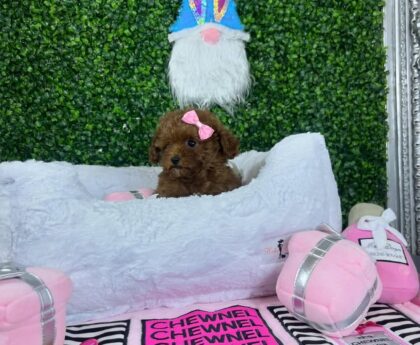
3. Teacup Toy Poodle
Toy Poodles are intelligent, active, and highly trainable. Their curly coats require regular maintenance, while their intelligence means they benefit from training games and mental stimulation.
A small size does not mean a Toy Poodle lacks energy or personality.
4. Teacup Pomeranian
Pomeranians are popular for their fluffy coats, expressive faces, and lively personalities. They are naturally small dogs, but the “teacup” label does not represent a separate recognized Pomeranian variety.
Their abundant coat requires regular grooming, and their small size means owners should take precautions against accidental injuries.
5. Teacup Maltese
Maltese dogs are small companion dogs known for their elegant coats and affectionate personalities.
Their coat can require frequent brushing and grooming, making regular coat care an important part of ownership.
6. Teacup Shih Tzu
Shih Tzus are companion dogs recognized for their friendly nature and distinctive appearance. They can adapt to different living environments but still need exercise, training, socialization, and grooming.
7. Teacup Papillon
Papillons are small, intelligent dogs recognized for their distinctive ears. Their compact bodies can make them appealing to people looking for small companions, but they remain active dogs that enjoy training and interactive activities.
8. Teacup Pekingese
Pekingese are compact companion dogs with distinctive coats and a dignified appearance. Owners should be prepared for breed-specific grooming and routine veterinary care.
9. Other Small Companion Breeds
Depending on how a seller uses the term, other naturally small breeds such as the Japanese Chin, Brussels Griffon, Chinese Crested, and Italian Greyhound may also be advertised as “teacup” dogs.
The important point is that these are individual recognized breeds, not separate teacup breeds. The AKC’s list of small breeds demonstrates that small dogs can have very different personalities, activity levels, and coat types.
Why the Teacup Label Needs Careful Consideration
When researching the types of teacup dogs, it is easy to assume that “teacup” means there is a standardized adult size. There is not.
The term can be used differently by different sellers. A buyer should therefore ask for specific information about the puppy’s breed, parents, current health, growth history, and expected adult characteristics.
Choosing a puppy exclusively because a seller promises an unusually tiny adult size can encourage unhealthy breeding practices.
Instead, look for responsible breeders who prioritize healthy structure, appropriate temperament, veterinary care, and breed-specific health considerations.
1. Put Puppy Health First
Health should always be more important than size.
When examining a puppy, look for an animal that appears alert, active, appropriately nourished, and comfortable interacting with people. The AVMA recommends looking for signs such as clear eyes, a clean coat, appropriate body condition, and an active and friendly temperament.
Ask for veterinary records and information about vaccinations and parasite prevention.
It is also wise to arrange a veterinary examination soon after bringing your puppy home.
2. Research the Breed Behind the Label
The best way to understand the types of teacup dogs is to research the actual breed rather than relying on the word “teacup.”
Before choosing a puppy, learn about:
- Adult breed characteristics
- Temperament
- Grooming requirements
- Exercise needs
- Training needs
- Common health concerns
- Compatibility with children
- Compatibility with other pets
- Expected ownership expenses
The AVMA recommends choosing a dog according to your home, lifestyle, family, and ability to provide lifelong care.
3. Choose a Responsible Breeder
A responsible breeder should be willing to answer questions and provide appropriate information about the puppy.
Ask:
- Can I meet the puppy’s parents?
- What health testing has been performed?
- Has the puppy received veterinary care?
- What vaccinations has the puppy received?
- How has the puppy been socialized?
- What food is the puppy eating?
- Can I review health records?
- What support is available after the puppy goes home?
Be cautious when a seller focuses exclusively on phrases such as “extra tiny,” “micro,” or “guaranteed miniature” without providing meaningful health information.
4. Understand the Safety Needs of Tiny Dogs
Small puppies can be particularly vulnerable to household accidents.
A puppy may be injured by falling from furniture, getting underneath appliances, being stepped on, or playing too roughly with a larger dog.
The AKC notes that toy breeds have the same fundamental needs for training, socialization, exercise, and enrichment as larger dogs, but their small size requires additional safety precautions.
Use barriers where appropriate and supervise interactions with children and larger pets.
5. Provide Proper Nutrition
Nutrition is an important part of puppy development.
Feed a complete and balanced puppy diet appropriate for the puppy’s life stage and individual needs. Your veterinarian can help determine an appropriate feeding routine.
Do not assume that an extremely small puppy should simply receive less food. Feeding requirements depend on several factors, including age, size, health, activity, and diet.
Fresh drinking water should always be available.
6. Start Training and Socialization Early
Every puppy needs training, regardless of its size.
Teach basic behaviors such as:
- Name recognition
- House-training
- Leash manners
- Recall
- Sitting
- Gentle handling
- Appropriate chewing
- Calm greetings
Small dogs can learn just as much as larger dogs. The AKC emphasizes that toy breeds benefit from training, socialization, exercise, and enrichment.
Socialization is equally important. The AVMA notes that proper puppy socialization during the early developmental period can strongly influence future behavior.
7. Consider Grooming Requirements
Different types of teacup dogs can have very different coat-care needs.
A Maltese or Yorkshire Terrier may need frequent brushing, while a Pomeranian’s dense double coat also requires regular maintenance. Toy Poodles need routine coat care to keep their curly hair manageable.
Grooming should also include regular nail care, dental care, ear checks, and appropriate bathing.
Starting gentle grooming routines while the puppy is young can make future maintenance easier.
8. Make Sure the Puppy Fits Your Lifestyle
A tiny dog is not automatically a low-maintenance dog.
Some small breeds can be energetic, vocal, intelligent, playful, or demanding of attention. Others may require substantial grooming.
Consider your daily schedule, housing, activity level, family members, existing pets, and available time before making a decision.
The AVMA specifically advises prospective owners to consider their living situation, work schedule, other pets, exercise opportunities, finances, and ability to provide lifelong veterinary care.
9. Prepare for Lifelong Responsibility
Choosing among the types of teacup dogs is only the beginning.
Dog ownership involves ongoing costs and responsibilities, including:
- Quality food
- Veterinary examinations
- Vaccinations
- Parasite prevention
- Grooming
- Training
- Exercise
- Identification
- Dental care
- Emergency preparation
- Companionship
A dog is a long-term commitment. The AVMA emphasizes that owners are responsible for their dog’s food, shelter, companionship, exercise, and physical and mental health throughout its life.
Types of Teacup Dogs for Families With Children
Families with young children should take extra care when considering a very small puppy.
Children can accidentally injure a tiny dog by picking it up incorrectly, dropping it, stepping on it, or playing too roughly.
The AKC notes that some small dogs are too delicate for particularly boisterous households and may be better suited to calmer environments.
Children should be taught how to approach, handle, feed, and play with a puppy safely, with adult supervision.
Frequently Asked Questions About Types of Teacup Dogs
Are teacup dogs a separate breed?
No. “Teacup” is generally a marketing term rather than an official breed classification. The underlying dog is still a specific recognized breed with its own breed standard and care requirements.
What are the most popular types of teacup dogs?
Chihuahuas, Yorkshire Terriers, Toy Poodles, Pomeranians, Maltese, Shih Tzus, Pekingese, and Papillons are among the small breeds that may be marketed using the teacup label.
Are teacup dogs good apartment pets?
Some naturally small breeds can adapt well to apartment living, but suitability depends on temperament, exercise requirements, barking, training, and the owner’s ability to provide appropriate daily care.
Do tiny dogs need exercise?
Yes. Small dogs still need age-appropriate exercise, play, exploration, training, and mental enrichment.
What should I consider before buying a teacup puppy?
Research the underlying breed, investigate the breeder, review health information, consider your lifestyle, prepare your home, and speak with a veterinarian about the puppy’s individual needs.
Final Thoughts
Learning about the types of teacup dogs can help prospective owners make a more informed decision. However, the word “teacup” should not be treated as a guarantee of a particular breed, adult size, personality, or health profile.
Whether you are interested in a Chihuahua, Yorkshire Terrier, Toy Poodle, Pomeranian, Maltese, Shih Tzu, Papillon, or another small companion breed, focus on responsible breeding and the individual puppy’s welfare.
Choose health and temperament over extreme size, research the breed carefully, provide appropriate nutrition and veterinary care, and give your puppy plenty of positive training and socialization.
Recommended External Resources
For additional educational information, these authoritative resources are useful:
- American Kennel Club – Toy Group
- American Kennel Club – Smallest Dog Breeds
- American Kennel Club – Toy Breed Safety, Training and Enrichment
- American Veterinary Medical Association – Selecting a Pet Dog