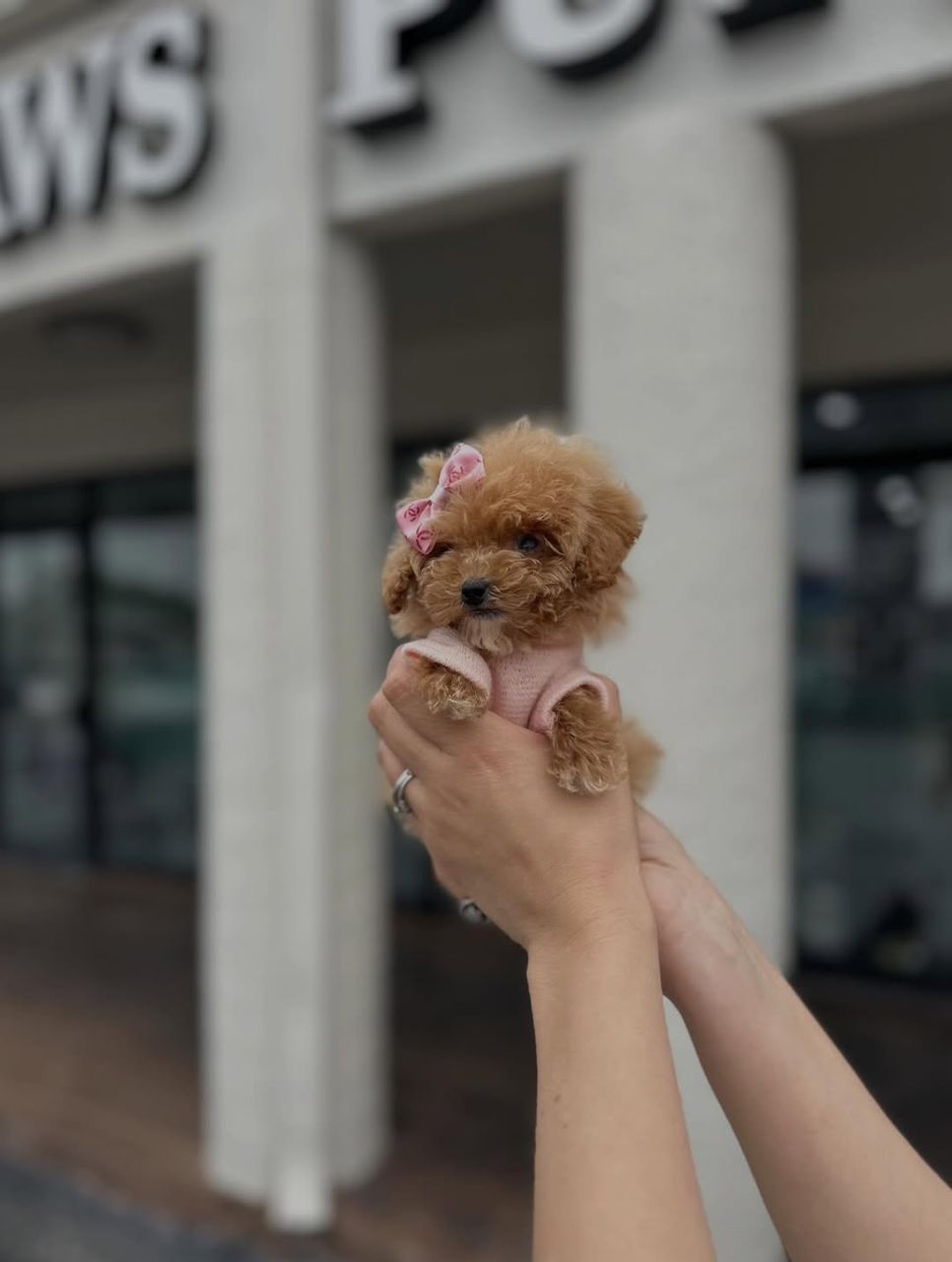

Teacup Pom Pom Puppies: 9 Powerful Tips for Choosing a Healthy and Happy Companion
Few puppies are as eye-catching as fluffy Pomeranians. Their tiny bodies, expressive faces, abundant coats, and lively personalities make them popular companion dogs. People searching for teacup pom pom puppies are often looking for an especially small Pomeranian with the charming appearance associated with the breed.
However, prospective owners should understand an important distinction: “teacup” is not an official Pomeranian size classification. The American Kennel Club recognizes the Pomeranian as a Toy Group breed, with the breed standard specifying a weight range of 3–7 pounds. The AKC also cautions against treating “teacup” as an official size designation.
For that reason, choosing a puppy should focus on health, temperament, responsible breeding, and appropriate care rather than simply finding the smallest puppy possible.
What Are Teacup Pom Pom Puppies?
The phrase teacup pom pom puppies is commonly used online to describe exceptionally small Pomeranian puppies. “Pom Pom” is a familiar nickname for the Pomeranian, while “teacup” is generally a marketing term rather than a recognized variety of the breed.
Pomeranians are naturally small dogs. According to the AKC breed standard, a Pomeranian is a compact, active toy dog with a distinctive double coat and a weight range of 3–7 pounds.
This means buyers should ask sellers exactly what they mean when they advertise a puppy as “teacup.” An unusually small puppy may require additional care, and extreme size should never be valued above overall health.
Why Are Teacup Pom Pom Puppies So Popular?
Pomeranians are popular because they combine a small physical size with an energetic and confident personality.
The AKC describes Pomeranians as inquisitive, lively, and bold. They are intelligent dogs that can enjoy training, games, short walks, and companionship.
Their fluffy double coat also contributes to their recognizable appearance. Pomeranians can have a variety of coat colors and markings, making individual puppies visually distinctive.
Their small size can also make them suitable for some apartment and city lifestyles, provided their exercise, social, training, and companionship needs are met.
Teacup Pom Pom Puppies and Responsible Selection
When looking for teacup pom pom puppies, responsible selection is more important than choosing a puppy based entirely on size or appearance.
The AKC recommends working with responsible breeders who prioritize healthy and behaviorally stable dogs. It also specifically cautions buyers about puppies marketed as “teacup,” because extreme smallness can be associated with health problems.
A good breeder should be willing to answer questions about the puppy’s parents, health history, environment, socialization, and veterinary care.
Questions to Ask a Breeder
Before making a decision, consider asking:
- Can I meet the puppy’s parents?
- What veterinary care has the puppy received?
- Are health records available?
- What health screening has been performed on the parents?
- How are the puppies socialized?
- What food is the puppy currently eating?
- What is the puppy’s current weight and growth history?
- Can you explain the puppy’s expected adult size?
- What support is available after the puppy goes home?
The AKC recommends visiting or otherwise evaluating the breeder’s environment and looking for puppies that appear clean, well-fed, lively, and friendly.
1. Put Health Before Extremely Small Size
The most important consideration when comparing teacup pom pom puppies should be health.
It can be tempting to choose the smallest puppy in a litter because of its tiny appearance. However, responsible breeding focuses on producing healthy dogs with sound structure and temperament rather than deliberately pursuing extreme physical traits.
The AKC warns that puppies marketed as “teacup” can be susceptible to health problems, including difficulty maintaining blood-sugar levels.
Ask for appropriate health documentation and have your chosen puppy examined by a veterinarian.
2. Understand the Pomeranian Coat
One of the defining characteristics of Pomeranians is their luxurious double coat.
The breed’s coat requires regular grooming. The AKC recommends frequent brushing to help keep the coat healthy and prevent matting. Professional grooming may also be useful for owners who are not comfortable managing the coat themselves.
Regular grooming can include:
- Brushing
- Bathing when appropriate
- Nail trimming
- Ear care
- Dental care
- Coat inspection
Introducing grooming gradually while the puppy is young can help make handling more comfortable as the dog grows.
3. Provide Appropriate Nutrition
Nutrition is an important part of raising a healthy puppy.
Choose a complete and balanced puppy diet appropriate for the dog’s age and size. Feeding amounts should be discussed with your veterinarian because individual nutritional requirements vary.
Very small puppies may require particular attention to their feeding routine. Do not assume that feeding a tiny puppy less food is automatically appropriate.
Fresh, clean water should always be available.
The AKC recommends selecting food appropriate for the dog’s life stage and monitoring body condition and calorie intake.
4. Begin Training Early
Never assume that a tiny dog does not need training.
Teacup pom pom puppies are still dogs with intelligence, energy, and individual personalities. Early training can help establish appropriate household behaviors and improve communication between the puppy and its owner.
Start with simple skills such as:
- Responding to its name
- Coming when called
- Walking appropriately on a leash
- House-training
- Sitting
- Gentle handling
- Appropriate chewing
- Calm greetings
Pomeranians are intelligent and can enjoy activities such as obedience and other interactive training. Positive reinforcement and consistency are particularly useful approaches.
5. Socialize Your Puppy Carefully
Socialization is an essential part of puppy development.
Introduce your puppy gradually to appropriate people, sounds, environments, handling experiences, and other suitable dogs. Experiences should be positive and controlled.
The AVMA recommends proper puppy socialization and notes that early experiences can have a significant effect on behavior later in life.
Because Pomeranians are small, interactions with larger dogs should always be supervised.
6. Make Your Home Safe
A tiny puppy can easily become injured by hazards that a larger dog might handle more easily.
Before bringing home teacup pom pom puppies, inspect your home for potential dangers.
Consider securing:
- Electrical cords
- Small objects
- Toxic household products
- Unsafe plants
- Open stairways
- High furniture
- Gaps beneath furniture
Pomeranians can also be surprisingly active and may attempt to escape through small spaces. The AKC recommends careful supervision when they are outdoors.
7. Be Careful Around Children and Larger Pets
Because Pomeranians are small, they can be injured accidentally during rough play.
Families with young children should teach them how to handle and interact with a puppy gently. Children should not be allowed to pick up or carry a tiny puppy without appropriate adult supervision.
Introductions to existing pets should also be gradual. A larger dog may unintentionally hurt a very small puppy even during friendly play.
8. Schedule Veterinary Care
A veterinary examination should be an important part of bringing home a new puppy.
The AVMA recommends arranging a veterinary examination soon after acquiring a new dog so the veterinarian can evaluate the puppy and advise on vaccinations, parasite control, nutrition, socialization, training, grooming, and preventive healthcare.
For Pomeranians, responsible breeders may screen breeding dogs for conditions including patellar, cardiac, and ophthalmic concerns. The AKC recommends asking breeders for appropriate health-screening information.
A veterinarian can also help you create an individualized preventive-care schedule.
9. Remember That a Small Dog Still Needs Exercise
Although teacup pom pom puppies are tiny, they are not simply decorative pets.
Pomeranians can enjoy short walks, indoor games, interactive toys, and training activities. Their exercise should be appropriate for their age, size, fitness, and health.
Mental stimulation is equally important. Training games and interactive activities can help keep an intelligent puppy engaged.
Frequently Asked Questions About Teacup Pom Pom Puppies
Are teacup pom pom puppies a separate breed?
No. “Teacup” is not an official Pomeranian variety or recognized size classification. It is generally a marketing term used to describe an exceptionally small dog. The AKC’s Pomeranian standard specifies a 3–7 pound weight range.
How big do Pomeranians normally get?
The AKC breed standard specifies a Pomeranian weight range of 3–7 pounds, with overall quality favored over size.
Do Pomeranians require a lot of grooming?
Their abundant double coat requires regular brushing and maintenance. Professional grooming can also be useful for owners who prefer assistance with coat care.
Are Pomeranians easy to train?
Pomeranians are intelligent and can respond well to consistent, positive training. House-training can require patience and consistency.
What should I look for when buying a Pomeranian puppy?
Look for responsible breeding practices, appropriate health records, good living conditions, healthy and active puppies, and a breeder who is willing to answer reasonable questions. Avoid making your decision solely on the promise of an exceptionally tiny adult size.
Final Thoughts
Teacup pom pom puppies can be appealing companions because of their tiny size, fluffy appearance, intelligence, and lively personalities. However, responsible puppy selection means looking beyond appearance.
Remember that “teacup” is not an official Pomeranian size classification. Instead of prioritizing extreme smallness, focus on health, temperament, responsible breeding, appropriate veterinary care, nutrition, grooming, socialization, training, and a safe home environment.
For additional educational information, these authoritative resources are useful:
- AKC Pomeranian Breed Information
- AKC Responsible Breeder Guide
- AKC Responsible Breeders
- AVMA Selecting a Pet Dog
