
All Teacup Puppy Breeds: 9 Powerful Tips for Choosing a Healthy and Happy Puppy
Small puppies can be incredibly appealing because of their adorable appearance, compact size, and affectionate personalities. However, anyone researching all teacup puppy breeds should understand that the word “teacup” does not describe an officially recognized breed category. Instead, it is commonly used as a marketing term for exceptionally small dogs.
The American Kennel Club explains that “teacup” is not an acknowledged size designation in its recognized breeds and warns that breeding specifically for extreme smallness can be associated with health concerns.
This guide explains the breeds commonly marketed as teacup dogs, what prospective owners should consider, and how to make a responsible puppy choice.
What Does “All Teacup Puppy Breeds” Mean?
When people search for all teacup puppy breeds, they are generally looking for very small versions of toy or small dog breeds.
There is no official list of “teacup breeds.” Instead, several naturally small breeds may be advertised using the teacup label. The American Kennel Club’s Toy Group includes breeds such as the Chihuahua, Maltese, Pomeranian, Pekingese, Poodle, Pug, Shih Tzu, Papillon, Yorkshire Terrier, Italian Greyhound, Japanese Chin, Brussels Griffon, and others.
Therefore, it is more accurate to think of “teacup” as a description sometimes used in advertising rather than a separate breed.
All Teacup Puppy Breeds Commonly Marketed as Tiny Dogs
Below are some of the small breeds you may encounter when researching all teacup puppy breeds.
Teacup Chihuahua
Chihuahuas are naturally very small companion dogs with confident personalities. Despite their size, they can be energetic, alert, and intelligent. Their small bodies mean owners should take extra care around stairs, furniture, larger animals, and young children.
Teacup Yorkshire Terrier
Yorkshire Terriers are small, lively terriers known for their long, silky coats. They can make affectionate companions but still need training, socialization, grooming, and mental stimulation.
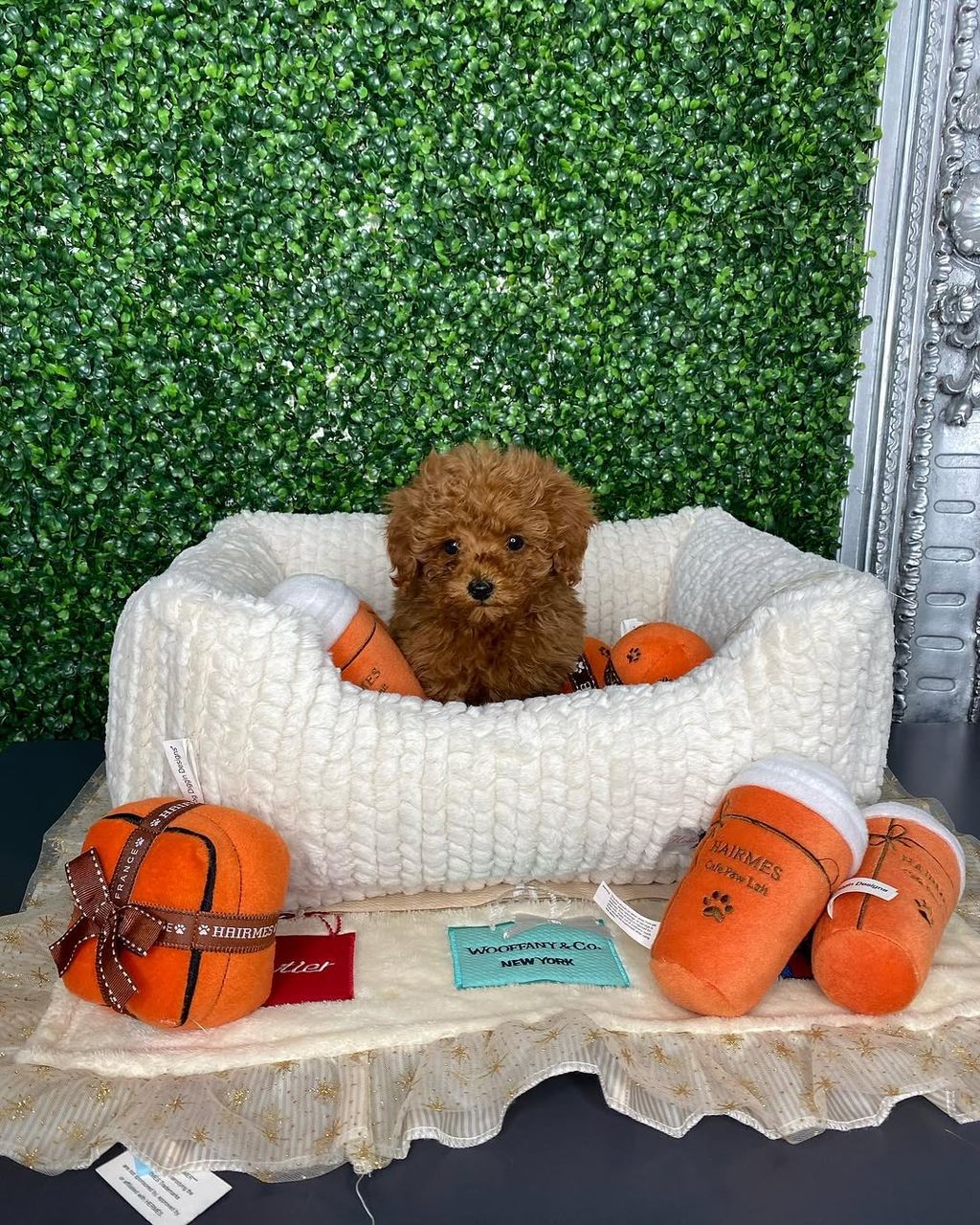
Teacup Toy Poodle
Toy Poodles are intelligent and highly trainable. Their curly coats require regular grooming, while their intelligence means they benefit from games, training exercises, and positive interaction.
Teacup Pomeranian
Pomeranians are energetic little dogs with thick coats and lively personalities. Regular brushing is important, and owners should provide appropriate exercise without exposing these tiny dogs to unnecessary physical risks.
Teacup Maltese
Maltese dogs are known for their affectionate personalities and long, flowing coats. Their coat requires consistent grooming, brushing, and attention to cleanliness.
Teacup Shih Tzu
Shih Tzus are companion dogs recognized for their friendly nature and distinctive coats. They can be suitable for many homes, but grooming and routine veterinary care are important parts of ownership.
Teacup Pekingese
Pekingese are compact companion dogs with distinctive facial features and coats. Their appearance requires owners to pay close attention to grooming and general health.
Teacup Papillon
Papillons are small, alert dogs known for their distinctive butterfly-like ears. Their size should not be mistaken for a lack of energy or intelligence. They can enjoy training, play, and interactive activities.
Other Small Breeds
Other breeds sometimes advertised with “teacup” terminology include Italian Greyhounds, Japanese Chins, Brussels Griffons, Chinese Cresteds, and other small companion breeds. The AKC’s Toy Group provides a useful reference for recognized toy breeds.
Why “Teacup” Is Not an Official Breed Size
One of the most important facts to understand when researching all teacup puppy breeds is that “teacup” is not an official breed classification recognized by the AKC.
Responsible breeders generally focus on producing healthy dogs with sound temperaments and characteristics appropriate for the breed rather than deliberately selecting extreme physical traits. The AKC specifically cautions that dogs marketed as “teacup” can be susceptible to health problems, including difficulty maintaining normal blood-sugar levels.
For this reason, buyers should concentrate on the puppy’s health, temperament, parents, veterinary records, and breeder practices rather than choosing a puppy simply because it is advertised as exceptionally tiny.
1. Research the Breed Before Choosing a Puppy
Every breed has different characteristics. A tiny dog may still require substantial attention, exercise, grooming, training, and social interaction.
Before choosing a puppy, research:
- Adult size and expected development
- Temperament
- Grooming requirements
- Exercise needs
- Common breed-related health concerns
- Training requirements
- Compatibility with children and other pets
- Expected costs of ownership
The AVMA recommends choosing a dog that fits your household, lifestyle, living environment, and ability to provide lifelong care.
2. Choose Health and Temperament Over Extreme Smallness
A healthy puppy should be the priority when comparing all teacup puppy breeds.
Look for a puppy that appears active, alert, appropriately nourished, and comfortable interacting with people. The AVMA recommends looking for healthy physical characteristics such as clear eyes, a clean coat, appropriate body condition, and an active, friendly temperament.
Do not assume that the smallest puppy in a litter is automatically the best choice. Extremely small size can sometimes be associated with additional care requirements.
3. Ask the Breeder Important Questions
A responsible breeder should be willing to discuss the puppy’s parents, health history, temperament, socialization, veterinary care, and living conditions.
Useful questions include:
- Can I meet the puppy’s parents?
- What veterinary care has the puppy received?
- Are health records available?
- How have the puppies been socialized?
- What is the temperament of the parents?
- What food is the puppy currently eating?
- What support is available after purchase?
The AKC recommends researching breeders carefully and observing whether puppies are clean, lively, well cared for, and raised in an appropriate environment.
4. Understand the Health Needs of Very Small Puppies
Very small puppies require careful handling. Their size can make them more vulnerable to accidental injury, especially around stairs, furniture, larger dogs, and young children.
A small puppy should have a safe environment where it cannot easily fall or be stepped on.
Toy breeds also require appropriate exercise, enrichment, socialization, and training. Their small size does not mean they should be treated as decorative pets. The AKC emphasizes that toy breeds have many of the same behavioral and enrichment needs as larger dogs, while requiring additional safety precautions because of their size.
5. Provide Proper Nutrition
Nutrition is particularly important during puppyhood.
Feed your puppy an appropriate diet recommended for its age, size, and individual needs. Avoid making major dietary changes without professional guidance.
Because extremely small puppies may have special nutritional requirements, ask your veterinarian about an appropriate feeding schedule and diet.
Your veterinarian can also advise you about vaccinations, parasite prevention, dental care, growth, and routine wellness examinations.
6. Start Training and Socialization Early
A tiny puppy still needs training.
House-training, basic obedience, appropriate handling, and socialization help a puppy develop into a confident companion. Introduce your puppy gradually to appropriate people, sounds, environments, and experiences.
The AVMA notes that proper puppy socialization can have an important influence on future behavior.
Toy breeds can be intelligent and energetic, so positive-reinforcement training can provide both mental stimulation and an opportunity to strengthen the relationship between owner and dog.
7. Make Your Home Safe
When bringing home a very small puppy, look at your home from the puppy’s perspective.
Secure electrical cords, block unsafe stairs, remove small objects that could be swallowed, and supervise interactions with larger pets.
The AKC recommends safety measures such as gates, ramps, and dog stairs for toy breeds to help reduce the risk of injuries.
A secure sleeping area and appropriately sized collar, harness, leash, food bowls, and identification are also useful preparations.
8. Consider Grooming Requirements
Grooming needs vary significantly between breeds.
Yorkshire Terriers and Maltese, for example, can require frequent coat care, while breeds with different coat types may have different brushing and bathing requirements.
Regular grooming can also provide an opportunity to check the puppy’s skin, ears, paws, nails, and coat.
Ask a veterinarian or qualified groomer for breed-specific advice, particularly if you are new to owning a small dog.
9. Plan for Lifelong Care
Choosing among all teacup puppy breeds should never be based only on appearance.
A puppy is a long-term commitment that involves food, veterinary care, training, grooming, exercise, companionship, identification, and emergency preparation.
The AVMA emphasizes that owners are responsible for their dog’s physical and mental health throughout its life.
Before bringing a puppy home, make sure everyone in the household understands the responsibilities involved.
Frequently Asked Questions About All Teacup Puppy Breeds
Are teacup puppies a separate breed?
No. “Teacup” is generally a marketing term rather than an official breed category. The AKC states that “teacup” is not an acknowledged size designation in its recognized breeds.
What are some breeds commonly marketed as teacup dogs?
Small breeds such as Chihuahuas, Yorkshire Terriers, Toy Poodles, Pomeranians, Maltese, Shih Tzus, Pekingese, Papillons, and other small companion breeds may sometimes be advertised using the term.
Are teacup puppies easy to care for?
Not necessarily. Small dogs still need proper nutrition, veterinary care, grooming, training, exercise, socialization, and companionship.
How should I choose a teacup puppy?
Focus on health, temperament, responsible breeding practices, veterinary records, and compatibility with your household rather than selecting solely for extremely small size.
Do small puppies need training?
Yes. Small dogs benefit from the same basic training, socialization, enrichment, and positive interaction as larger dogs.
Final Thoughts
Researching all teacup puppy breeds can help prospective owners understand the wide variety of small dogs available. However, remember that “teacup” is not an official breed category, and extremely small size should not be prioritized over health and welfare.
Whether you are considering a Chihuahua, Yorkshire Terrier, Toy Poodle, Pomeranian, Maltese, Shih Tzu, Papillon, or another small companion breed, take time to research the breed and choose a responsible source.
For additional educational information, consult these authoritative resources:
- American Kennel Club – Toy Group
- American Kennel Club – Responsible Breeder Guide
- American Kennel Club – Toy Breed Safety and Care
- American Veterinary Medical Association – Selecting a Pet Dog
